by Amanda Sheppard
“It’s supposed to be hard. If it wasn’t hard, everyone would do it. The hard is what makes it great.”
– A League of their Own
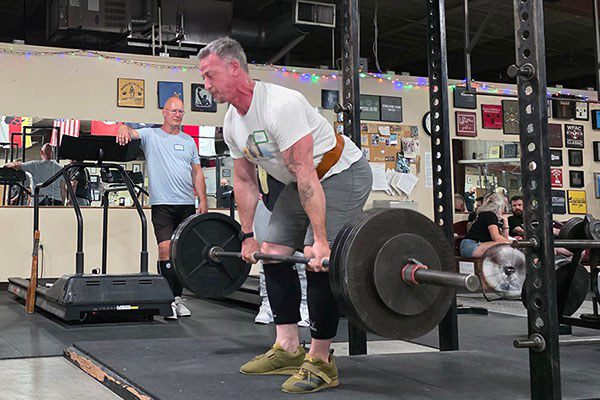
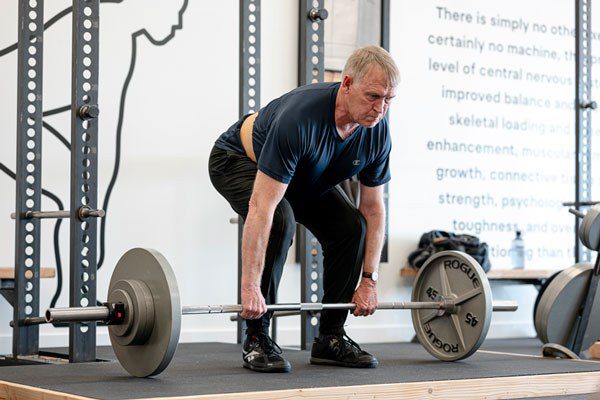
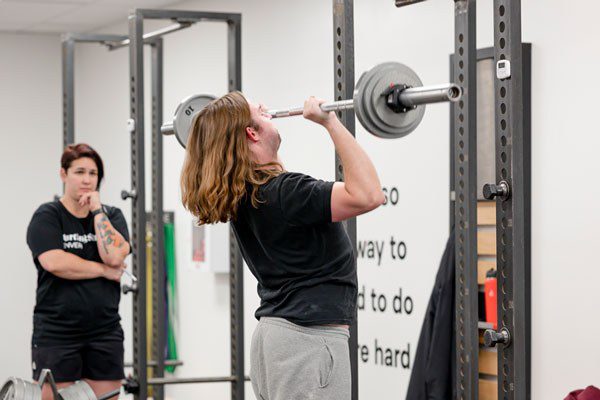
“Easy doesn’t work” is a quote you will find on the wall of every Starting Strength Gym. There are probably iterations of it in every weight room or team room at every level of sports, or even on a flag in home gyms across the world. This sign is always to the point, with no fluff, no hidden meaning. When you’re operating within your comfort zone or handed an easy task, what is present during the effort but often lacks upon completion? Satisfaction. Sure, the task might be complete, and maybe the goal was just to check the box. But a checked box doesn’t always indicate a fulfilling endeavor. That’s why training can be so damn hard.
In the gym I point to this quote on the wall often when the client begins to say things like, “man, it’s getting heavy” or “why do I have to keep putting weight on the bar? It already feels heavy enough.” When we address it then and there the explanation is simple. To get stronger, we must continue to increase the stress by way of increased weight, reps, or sets – we must increase the work. The explanation gets the point across in the short term, until eventually the work required outweighs the desire of the client to get stronger, and they decide to leave. The passion and desire of the coach to make you stronger holds no bearing on a client at this point, no matter how strong you think they can get or how well their progression is going.
There are many ways this standoff plays out, and I can’t imagine there is one way to deal with all of them, given that individuals are so damned
individual. What you can do for or say to one client likely won’t work for the person on the platform next to them. As a coach, you can try to force the fit each time, or you can meet the lifter where they are and use your full range of knowledge and experience to help the person in front of you at that moment.
More Weight?
Some clients walk in the gym with goals that are so far from number-driven that your only goal as a coach becomes making them resilient enough that life just isn’t so damn hard to tolerate. These situations can be a bit tricky because the milestones that you as a lifter have come to celebrate – a bodyweight squat, a double-bodyweight deadlift – might mean very little to the new person under the bar. Those goals just aren’t things they’re dying to tell their social circle, and you’re a bit deflated because you know they’ve become a part of a small percentage of people their age who can do that. Even at that point, they often want to know, “Why do I have to keep getting stronger?”
The truth is that no coach, family member, or fellow lifter can ever answer that for you. Working to raise your strength ceiling over time is hard work, and personal to you. But you can’t live there forever. We as coaches know that as you progress, and as we spend less time close to your
ceiling, we are also simultaneously working to raise your
floor. A weight you used to do for a hard set of 5 is now a warmup, or a weight you did for a 1RM you can now do for reps. Success!
Strength training is a very purposeful, mundane, and repetitive endeavor that you must consider as necessary in your life.
Here’s one suggestion I’ll make to any lifter reading this: if you’re working and grinding away at hard weights, and you’re burned out, losing enjoyment, or need a breather,
talk to your coach. We can read bar speed. We can spot movement pattern improvements or deviations. We can see
Aha! moments happen in real time. But one thing we still can’t do is read your mind. There’s nothing worse than thinking things are going great, only to find out someone’s decided to quit because they’re “strong enough” or they’ve had a secret nagging injury they’ve never mentioned.
The Body is Lazy.
Unfortunately, when that moment occurs sometimes there’s nothing a coach can say to stop it. It’s at this point that as they’re walking out the door, I only want to yell one thing at them: “Just remember, your strength won’t stick around once you stop!” Not great customer service, but a sobering truth to a person that probably won’t look at a barbell again for a while.
The body is smart. It values efficiency. It only works as hard as necessary and only as hard as we ask it to work. So, if you stop stressing it appropriately, the strength and conditioning that you have accumulated will begin to decline. Humans can be sedentary and function on very little fuel because that’s all you need. But you won’t be living; you’ll just be surviving.
You hear a lot of people say, “You can only train as much as you can recover from.” They’re not wrong. You can’t get strong while eating like a small bird, or an undisciplined 10-year-old at a McDonald’s with no attention whatsoever to the amount of protein you put into your body.
If your protein intake is low and your sleep is minimal, your progress will be too. At this point, a lack of information isn’t the issue. There are so many resources available for nutrition and recovery that you choosing not to engage isn’t due to a lack of information – it’s a lack of willingness. I won’t waste your time restating the basics. You either want to do the work, including the work of recovery, or you don’t.
Now What?
Now let’s say that you got a client, and you created this wonderful relationship for the long haul. The PRs and increasing weight on the bar eventually become so sporadic that they ask you one simple yet daunting question. “Now what?”
Here’s one of the times where I appreciate my time spent as a college strength coach. In that setting, you knew that you had a time when you could put the pedal to the metal and get strong, and then there were going to be times when you’re the first on the list to get a session canceled in-season because practice ran long so that the head coach decided not to lift. However, that experience taught me how to pivot. And it’s why I can now tell someone:
You have your strength. Go use it.
Take on a sport, or any skill where the amazing physical attributes you now possess can be used. You’ve given yourself the tools to build power, endurance, agility, and speed. But you’ve also sharpened balance, coordination, precision, and accuracy. All these attributes are built on a foundation of strength that can now be practiced with better acuity.
Congratulations, you son of a gun, you’re now an athlete! Go perform!
And if sports aren’t your thing? I’m sure you can do things around your house or with your kids or grandkids that you’ve been dying to start or pick back up. Well, go do them! And then come back in the gym and continue to push your ceiling, or at the very least raise your floor.
Injuries.
No one really wants to talk about this at length because, let’s face it, injuries aren’t fun. But pain is a human experience that few get to avoid for any length of time. Most coaches flinch a bit, maybe even internally, at the first sign of discomfort or the mention of pain from a client. This isn’t always because they aren’t prepared to help you, but because they know you will need the physical and mental fortitude for what lies ahead. If you’ve ever worked with a coach or personal trainer who says they can
prevent injury, I can only tell you that
everybody eventually gets hurt.
But can we work hard together to reduce the risk? Manage stress? Mitigate the symptoms when pain and injury arise?
Absolutely. There’s great work out there that addresses the biopsychosocial model of pain and how multifaceted each situation is. Being able to pinpoint one reason, unless you drop a weight on your foot or get hit by a car, is nearly impossible to accomplish. Pain occurs, and we often don’t know exactly why.
This could be the epitome of “easy doesn’t work.” These situations require trust, experimentation, and an amount of patience than most people don’t want to muster. No one likes to be in pain, and as a coach I don’t like to see my clients in pain. But allowing yourself to be vulnerable to the process and realizing that the answer lies somewhere among symptom mitigation, load management, effort, and consistency, your body can stop working against you and begin to work for you.
Unless, of course, you really did get hit by that car.
The Coaching Perspective
The thoughts above are not new or profound in any way. But hearing it enough or in a slightly different context it might cause one of those Aha! moments that I mentioned above. At least that’s the hope. The question is, why bring it up again?
From the outside, coaching seems like an easy way to pass the time to a layman. Drink your coffee. Bring some encouragement. And be sure to know how many reps your client is doing so you can tell them when the set is over. (Though if you ask me how many are left, I’ll always say, “One more.” Unless there are two more.)
The truth is, there are people out there who call themselves coaches that have no business working with people of different demographics, or don’t possess the knowledge to work someone past their first plateau or whatever the bump in the road might be. It’s the easy client that progresses through the novice linear progression with little to no deviation, and recovers the way that you would hope, that makes the job of a coach look like a walk in the park.
That however is far from reality if you build a roster big enough. Passion for the coaching profession is fleeting. As soon as you feel enthusiastic about one situation, along comes an individual who pushes the boundaries of your abilities or wants
you to explain to them
their “why.”
I liken picking your profession to choosing a sport when you’re young. When you decide to throw a ball, run cross country, or compete in the 100m dash, each of these activities has a way of eliminating you from the very beginning if you don’t possess a certain amount of skill. Even if your parents want you to receive that participation trophy so badly, eventually your time will run out and you won’t make the team, the cut, or the finals. When it comes to a job, if you’re good at what you do and the service you offer has brought enough value to others, then you’ll get paid for it.
If passion was the only thing driving an individual at this point, this wouldn’t be a job – it would be a hobby. “Easy” in the coaching industry doesn’t work either. You’re going to get the occasional hard case. You’re going to get those who don’t feel as if they belong there. And sure, you can just fire that person as a client and move on.
But then what? Another box checked; another task finished without satisfaction?
Or maybe you can change someone’s perspective. Maybe you could help them realize that the road less traveled, through a lifetime pursuit of strength and resilience, is worth it.
Hard
is daunting. But easy
doesn’t work.
Originally published 8/27/25 at StartingStrength.com